Space between things.
Clear circulation and a few deliberate groupings let furniture and materials stand out. Concealed storage makes this calm practical.

Japanese restraint.
Scandinavian comfort.
Space to slow down.
Concept visualisation created for this style guide. Not a completed EmberArc project.
Japandi brings Japanese restraint together with the warmth and everyday comfort associated with Scandinavian interiors. The emphasis is on useful objects, natural textures and space between things.
Pale oak, lime-toned walls and linen create a soft base. Charcoal framing adds definition, while woven surfaces and handmade ceramics give the room character. It is a considered home, not an empty one.
Texture does the work that ornament would otherwise do.
Illustrative samples. Final materials are selected for the site, upkeep and physical samples; timber tones can also be achieved with suitable locally available species or veneers.
This direction suits you if a few well-made pieces feel more appealing than a room filled with decoration.
Low seating is a visual choice, not a requirement. Seat heights, storage and circulation can be adapted to children, older family members and the way you actually live.
Clear circulation and a few deliberate groupings let furniture and materials stand out. Concealed storage makes this calm practical.
Timber lattice, slatted screens and linen sheers soften daylight and create layers of privacy. Exterior screens need detailing for rain, sun and maintenance.
Horizontal furniture, woven seats and quiet timber grain balance clean geometry. Handmade ceramics add individuality without visual clutter.
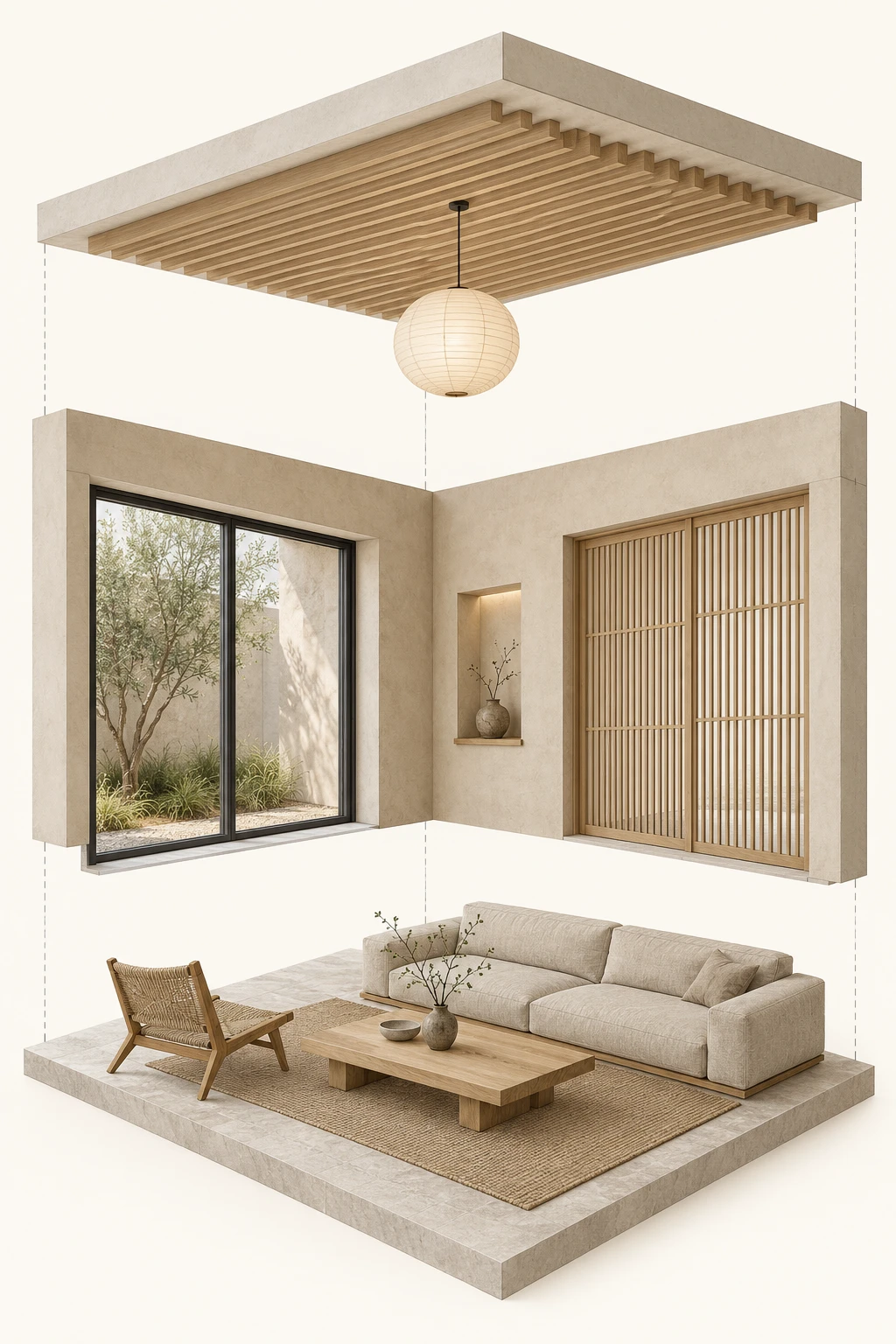
Conceptual material and spatial study, not a measured construction assembly.
A restrained palette makes the quality of each junction and surface more visible.
We can adapt this palette to your rooms, your site and the way you live.
Explore this direction for my project